Mental Fitness Mondays: How you Communicate with Yourself Matters More than you Think
15th June 2026Your self-regard can be strengthened, and the starting point is awareness
“You idiot.”
“I can’t believe you just said that; you’re so embarrassing.”
“You’ll never succeed, don’t even bother.”
If you had a friend who spoke to you like this, I’m not sure how much time you’d choose to spend with them. But these aren’t words I hear others say to me; they’re words I’ve said to myself. More than once. I’d put good money on a bet that you’ve said similar things to yourself too.
When the inner critic jumps in
Often, these inner put-downs show up after the smallest mistake. Dropping a cup, forgetting something obvious, or saying the wrong thing in a meeting. If you’re anything like me, you might default to self-criticism so quickly that you barely notice it happening.
This voice, the inner critic, seems to be close to universal. It’s shaped by early experiences, by what we absorbed growing up, and by a human tendency towards negative bias. Our brains are better at noticing what went wrong than what went well. You’re more likely to replay your mistakes at the end of the day than to dwell on what you handled well.
Having an inner critic isn’t wrong, in small doses it can even be helpful. But when it’s given too much airtime, it impacts one of your mental fitness muscles: self-regard, part of the core muscle of Self Care.
Poor Self Regard?
A union official I know, who’s deeply committed, values-led and capable, is relentlessly hard on herself. She repeatedly assumes she’s wrong, that she’s let people down, or that she’s about to be found out, even when there’s little evidence to support that view. She has ADHD, and one of the ways this shows up for her is through Rejection Sensitivity Dysphoria. This means that even small pieces of feedback can trigger crippling self-doubt. Her inner critic is loud, and exhausting, and often bears little resemblance to how others experience her.
I also know plenty of people, including myself, who don't have ADHD but can suffer with poor self regard.
An over inflated balloon
At the other end, I watched a speech by a US politician who frequently shares false or misleading information. He appears very confident, even superior, but what I see isn’t healthy self-regard. There’s little reflection, a lot of defensiveness, and a strong focus on controlling the external world rather than checking in internally. Like an over inflated balloon, he attracts attention, but watch out for the bang at the slightest push! That kind of self-regard doesn’t build mental fitness; it shuts down learning, feedback and connection.
Finding the middle ground
In a previous post, I wrote about self-regard as a spectrum and the importance of finding the Goldilocks amount. I want to bring that idea closer to home here, into how it sounds and feels inside you.
On a recent workshop, I met a leader in UK politics who illustrated this beautifully. He was reflective and willing to question how well he was leading his team. He could see his strengths clearly, while also acknowledging where he needed to improve. His inner critic was present, but it wasn’t running the show. He didn’t dismiss feedback, and he didn’t collapse under it either. He could be honest without being cruel, confident without being defensive.
A couple of tips:
Like all mental fitness muscles, your self-regard can be strengthened, and the starting point is awareness.
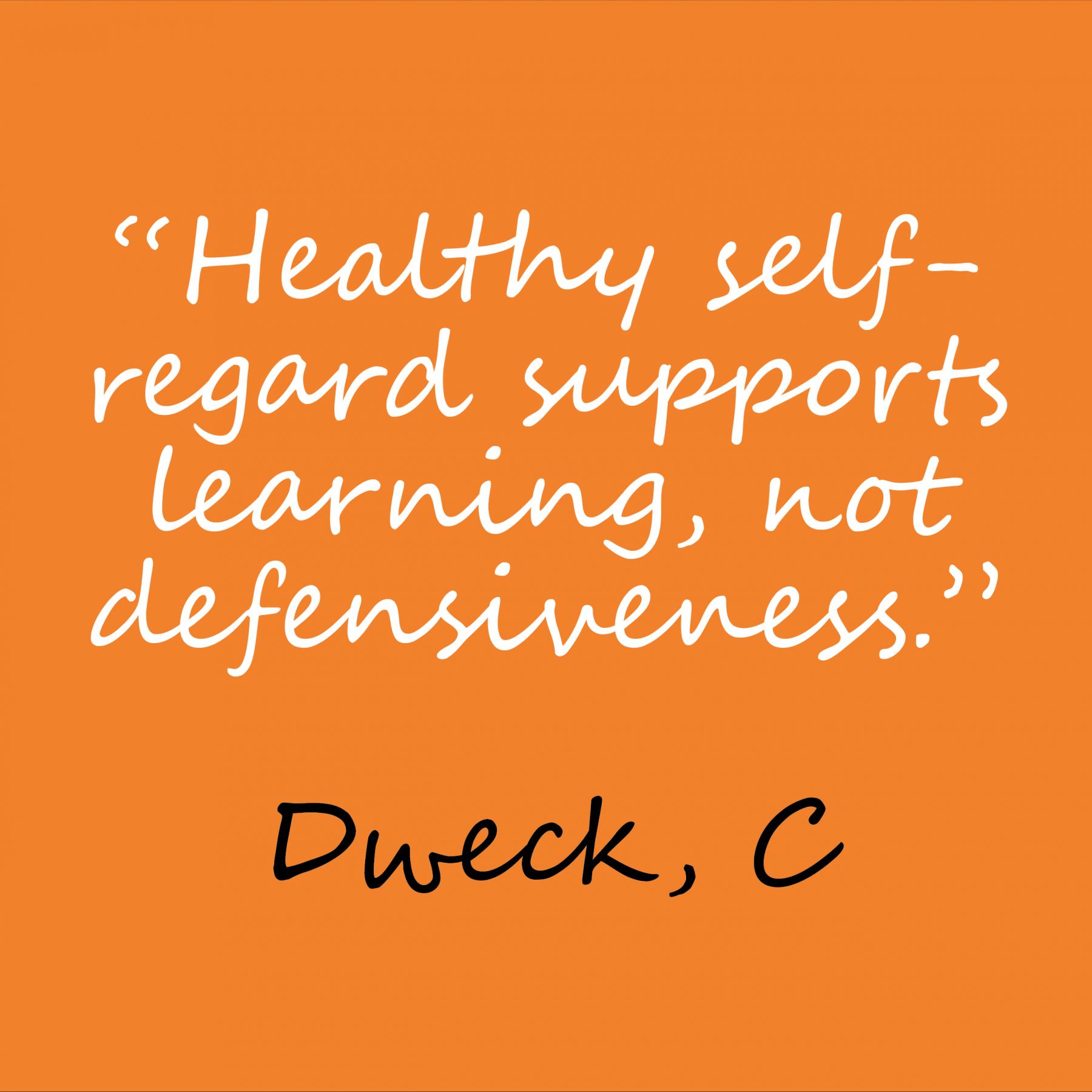
My encouragement to you is this: notice how you speak to yourself. If you’re regularly putting yourself down, can you soften that voice just a little? You don’t have to leap straight into self-praise if it’s uncomfortable, a small shift is enough. Healthy self-regard doesn’t let you off the hook, it just stops you beating yourself up while you learn.
One simple way to rebalance that negative bias is to make a habit of asking yourself a different kind of question, like the two below. Notice what happens when you pause to answer. That moment of awareness is you exercising your self-regard muscle.
A coaching question to get you thinking:
What is something I like or appreciate about myself?
Or, if this feels easier, what’s one good thing I did today?